

 From President Sergio Mattarella’s call for new “horizons of humanity” to extraordinary stories of reconciliation, the opening day of the Meeting di Rimini transforms Dante’s timeless words into a contemporary question: what can still bring people together in an increasingly fragmented world?
RIMINI, Italy — Some gatherings begin with an agenda. Others begin with a question.
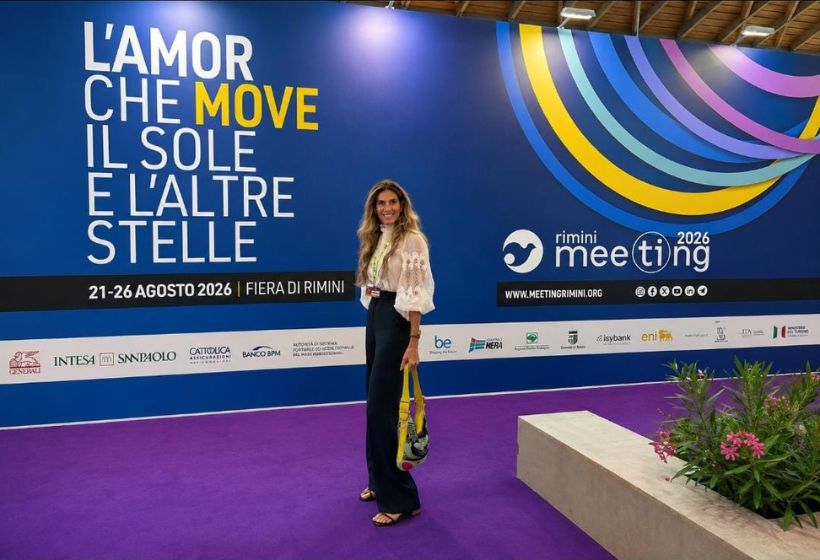
The 47th Meeting for Friendship Among Peoples, which opened in Rimini on August 21, belongs firmly to the latter.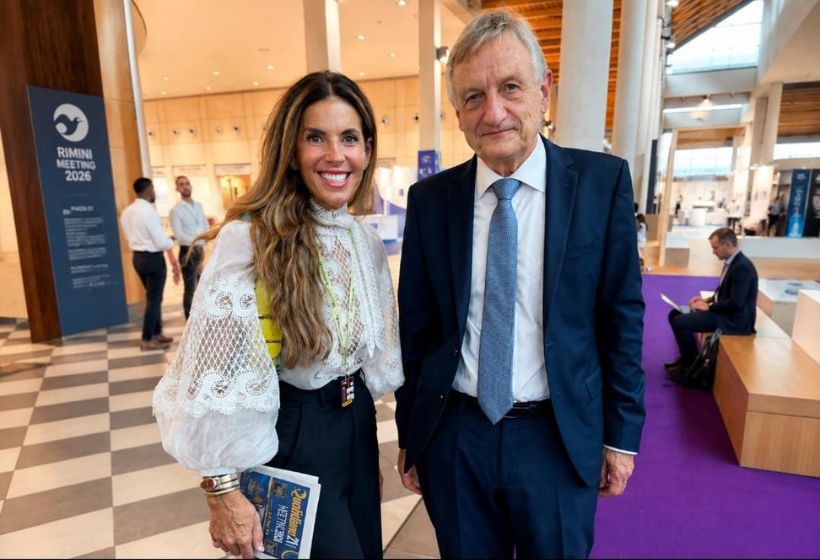
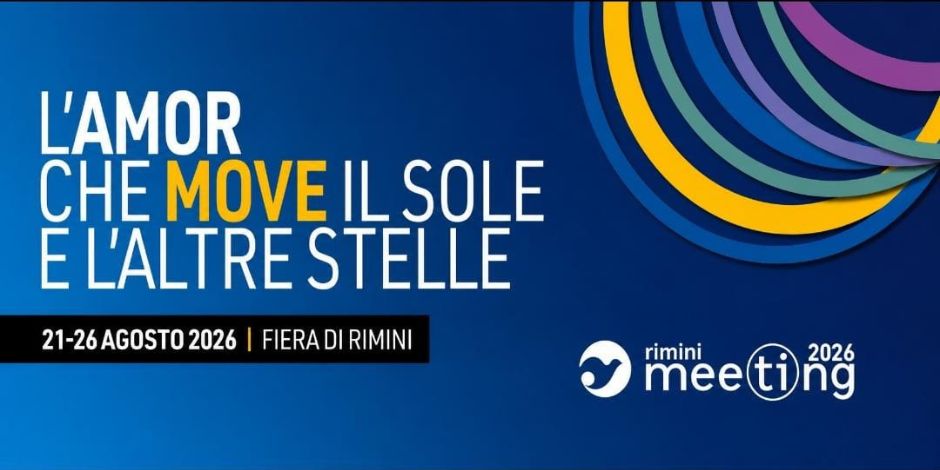
Its theme comes from the final verse of Dante’s Divine Comedy: “L’amor che move il sole e l’altre stelle” — “The love that moves the sun and the other stars.”
More than seven centuries after Dante wrote those words, Rimini has chosen them not as a nostalgic tribute to Italy’s literary heritage, but as a challenge to the present.
In a world shaped by wars, geopolitical fragmentation, economic uncertainty, demographic pressures and rapidly accelerating technological change, what is powerful enough to reconnect people?
The answer emerging from the first day was strikingly simple: human relationships.
Mattarella: New “Horizons of Humanity”
Italian President Sergio Mattarella set the institutional tone of the opening day in a message addressed to Bernhard Scholz, President of the Meeting Foundation.
Mattarella reflected on the relationship between the individual and the community — between the “I,” the “you” and the “we.”
His message reached far beyond Rimini.
Against a global backdrop of wars, increasing inequality and concentrations of power, the President pointed toward solidarity, social friendship and generosity as forces capable of opening new possibilities for politics, economics and society.
His wish for the Meeting was encapsulated in a particularly powerful expression: to continue building “horizons of humanity.”
It became one of the defining ideas of the day.
Two Women Who Should Have Been Enemies
Perhaps the most unforgettable moment of the opening came not from politics but from two women.
Roseline Hamel is the sister of Father Jacques Hamel, the French priest murdered in 2016 during the terrorist attack on the church of Saint-Étienne-du-Rouvray.
Nassera Kermiche is the mother of one of his killers.
History appeared to have assigned them opposite roles forever.
Instead, something extraordinary happened.
They met.
They listened.
And eventually, an unexpected friendship emerged from two very different forms of grief.
Their encounter in Rimini, under the title “Pain, Friendship, Hope,” gave tangible meaning to a word frequently invoked but much harder to practise: reconciliation.
At a moment when governments around the world are searching for diplomatic paths out of conflict, Rimini offered another perspective.
Peace begins before diplomacy. It begins when human beings decide that hatred will not have the final word.
The Future Is Also Economic
Yet Rimini is not a retreat from the realities of economics and policy.
The conversations of the opening day quickly moved from reconciliation to the challenges shaping Italy and Europe.
Agriculture, food security, climate pressures and the rising cost of energy entered the discussion with Italy’s Minister of Agriculture, Food Sovereignty and Forestry Francesco Lollobrigida, who addressed issues affecting the agricultural and agri-food sectors during the first day.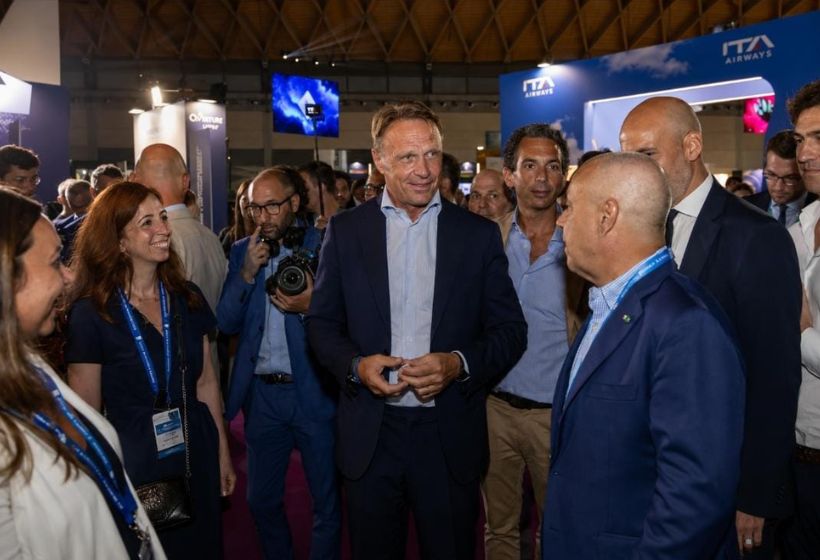
The underlying question was broader than agriculture itself.
How can Europe remain competitive while protecting its territories, communities and strategic autonomy?
It is a question increasingly central to the European debate — and one that connects food, energy, technology and industrial policy.
The Battle for Talent
Another major conversation focused on perhaps Italy’s most consequential long-term challenge: young people, employment and demographics.
At 5 p.m., Minister for Universities and Research Anna Maria Bernini joined representatives from business, banking and agriculture, including Maria Anghileri, President of Confindustria’s Young Entrepreneurs; Stefano Barrese, Head of Intesa Sanpaolo’s Banca dei Territori Division; and Ettore Prandini, President of Coldiretti.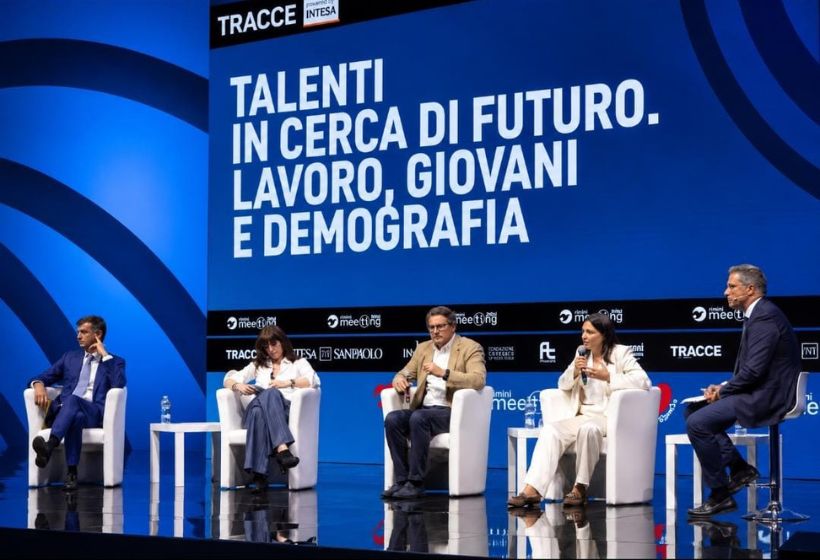
Behind the discussion lies a paradox shared by many advanced economies.
Companies need talent.
Young people need opportunity.
Universities produce knowledge.
Yet these worlds do not always meet.
For Italy, attracting and retaining a new generation of highly skilled professionals is becoming more than a labour-market issue.
Talent is becoming a strategic national asset.
Demography, education, innovation and competitiveness are increasingly parts of the same equation.
Rimini as a Laboratory of Encounters
Walking through the halls of the Rimini Expo Centre, one quickly understands why the Meeting has survived — and grown — for almost half a century.
Politicians encounter entrepreneurs.
Religious leaders meet economists.
Students listen to ministers.
Academics share stages with people whose authority comes not from institutions but from extraordinary personal experiences.
The result is sometimes unexpected.
And that may be precisely the point.
Because the most important word emerging from the opening day was not politics, economics or even geopolitics.
It was relationship.
Relationship between people who were supposed to remain enemies.
Between generations.
Between education and enterprise.
Between economic growth and social responsibility.
Between different cultures and nations.
From Rimini to the Days Ahead
The first day offered only the opening chapter of a Meeting that will continue until August 26.
More government representatives, international personalities, business leaders, academics and religious figures are expected to take the stage in the days ahead, with the programme expanding the conversation around peace, work, education, technology, Europe and the future of society.
The anticipation surrounding the historic visit of Pope Leo XIV on August 22 has also accompanied the opening of this edition. But that moment belongs to the days ahead — not to the first day itself.
For now, what emerged from Rimini on August 21 was something more fundamental.
At a time when much of international debate is organised around what divides us — East and West, North and South, left and right, winners and losers — the Meeting began from another premise:
What still unites us?
The first day did not pretend to offer easy answers.
Instead, it offered something potentially more valuable: a place where the questions can still be asked together.
Dante placed love at the end of his extraordinary journey through Hell, Purgatory and Paradise as the force capable of moving the universe.
Seven centuries later, Rimini has brought that idea back into the public square.
Not as poetry alone.
But as a proposition for our time.
Perhaps the greatest challenge facing leadership today is not simply learning how to manage change, but remembering what — and whom — that change is ultimately meant to serve.

